
Script:
Today I’m talking about something I’ve been unpacking for a while: the difference between vigilance and what people usually call public speaking anxiety.
I recently found an old photo of myself at a public keyboard performance, at a Burger King opening event. I might share it online with my face blurred for privacy.
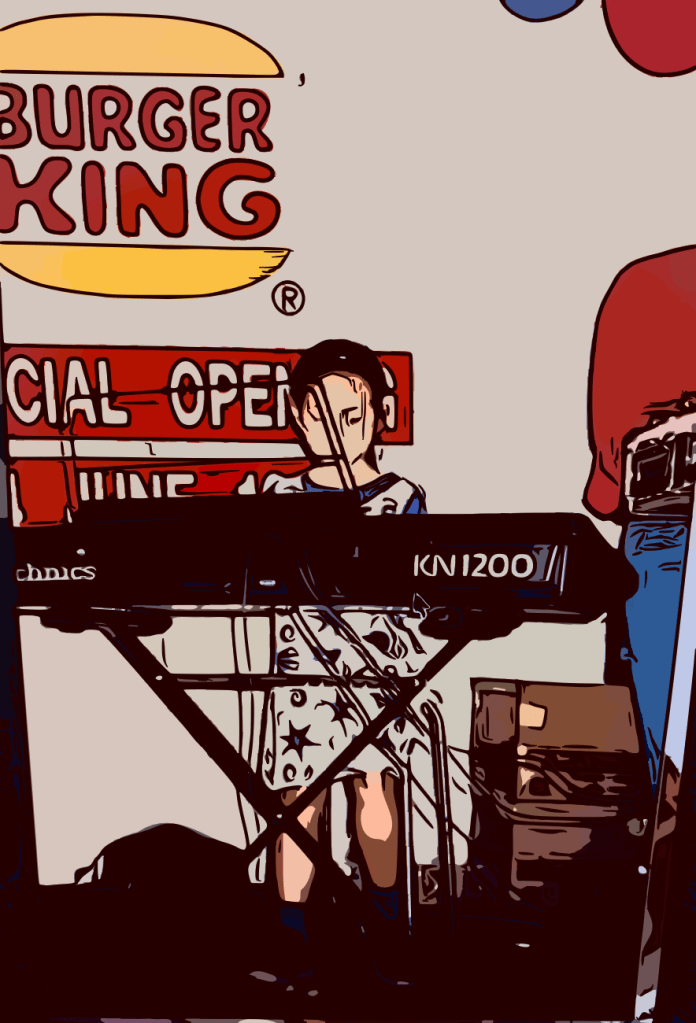
Seeing it reminded me that as a kid, I actually had very little performance anxiety. I was shy and quiet, but I could do storytelling contests or impromptu dance recitals without overthinking it.
Things shifted in my early tweens. My hair was suddenly cut very short (not by choice) and that was my first real experience of being judged based on appearance. It was a strange, formative moment.
By fourteen or fifteen, I remember thinking:
“Okay, I guess I need to work on my personality, because I don’t have much else going for me.”
Bless my poor young self.
That’s really when self‑consciousness started, and it grew into social anxiety by my late teens. I had just entered a co‑ed environment for the first time, and class presentations would send me straight into freeze or flight mode. To their credit, no one really bullied me (everyone was actually mostly kind, from what I remember!) but my nervous system didn’t care.
This carried into adulthood as well, especially with big virtual meetings or impromptu public speaking situations.
And I always felt like it wasn’t a “public speaking” issue in the traditional sense.
It was years of hyper‑vigilance, plus other experiences like narcissistic personalities and gaslighting, that slowly eroded my trust in my own voice.
That’s one of the main reasons I’ve been doing this flexible, 30-day microcast challenge.
Not to become a perfect speaker, but to ease myself back into a grounded, comfortable level of vocal expression. One small episode at a time.
 Jess Chua
Leave a comment